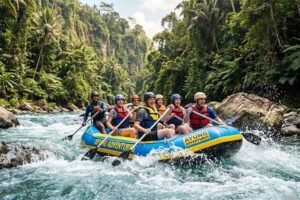
If you are looking for an exciting rafting adventure in Bali, the Ayung River Bali location should be at the top of your list. This river is famous for its scenic views, beginner-friendly rapids, and easy access from Ubud. It is not just about adrenaline. It is about enjoying nature, culture, and a memorable outdoor experience in one trip.
Rafting on Ayung River offers a balance between thrill and comfort. That is why it is one of the most popular rafting spots in Bali for first-timers, families, and adventure lovers alike.
Where Is Ayung River Bali Located
The Ayung River is located in Gianyar Regency, Bali, flowing through lush tropical valleys near Ubud. The most popular rafting access points are just a short drive from central Ubud, making it very convenient for travelers staying in this cultural hub.
This strategic location is one of the main reasons why Ayung River rafting is so popular. You do not need to spend hours on the road to reach the starting point. In most cases, it takes only 10 to 20 minutes from Ubud hotels or villas.
If you want to understand the distance better, this guide on how far Ayung River rafting is from Ubud explains it clearly.
Why Ayung River Is Perfect for Rafting
Ayung River is known for its Class II and III rapids. This means the river is exciting but still safe for beginners. You will experience splashes, small drops, and fun waves without extreme risks.
Another reason people love rafting here is the scenery. Along the route, you will see green forests, rice terraces, waterfalls, and traditional stone carvings on the river walls. Few rafting locations in Bali offer this kind of visual experience.
Compared to other rivers, Ayung River focuses more on enjoyment and natural beauty. That is why many travelers say it is the best river rafting in Bali for a relaxed yet adventurous trip.
What to Expect During Ayung River Rafting
A typical rafting trip on Ayung River lasts around two hours on the water. Before starting, professional guides provide a safety briefing and paddling instructions. You do not need previous rafting experience.
The route usually covers about 10 to 12 kilometers. Along the way, there are calm sections where you can relax and enjoy the view, mixed with exciting rapids that keep the adventure alive.
If you are new to rafting, this beginner-focused guide on Bali river rafting for beginners is very helpful.
Is Rafting on Ayung River Safe
Safety is one of the strongest points of rafting at the Ayung River Bali location. The river conditions are stable throughout most of the year, and professional operators follow strict safety standards.
You will be provided with essential equipment like helmets, life jackets, and paddles. Certified guides stay with you in the raft at all times, guiding you through each rapid.
Even non-swimmers can join the experience safely. The river depth is manageable, and the life jacket keeps you afloat. For more clarity, you can read is rafting safe for non swimmers.
Best Time to Visit Ayung River for Rafting
Rafting on Ayung River is available all year round. However, the best time depends on what kind of experience you want.
During the dry season, from April to October, the water level is stable and clear. This is ideal for beginners and families who want a smooth and scenic ride.
In the rainy season, from November to March, the water level rises slightly. The rapids become more exciting, making it perfect for those who want a bit more thrill while still staying safe.
What to Wear and Bring
Choosing the right outfit makes your rafting experience more comfortable. Wear lightweight clothes that dry quickly, such as sportswear or swimwear. Avoid heavy fabrics like jeans.
Water shoes or sandals with straps are recommended to protect your feet. Do not forget sunscreen and a change of clothes for after the trip.
For a detailed checklist, this guide on what to wear for white water rafting in Ubud Bali covers everything you need.
Ayung River Rafting Compared to Other Bali Rivers
Bali has several rafting rivers, but Ayung River stands out for accessibility and scenery. Rivers like Telaga Waja offer stronger rapids but require longer travel time and are better suited for experienced rafters.
Ayung River is ideal if you want a balanced adventure. You get fun rapids, beautiful surroundings, and easy access from major tourist areas. This makes it the top choice for travelers staying in Ubud.
If you are curious about how rafting works in general, this article on how does white water rafting work explains the basics clearly.
Tips to Make the Most of Your Rafting Trip
Arrive well rested and stay hydrated before the trip. Listen carefully to your guide during the safety briefing. Small details can make a big difference on the river.
Do not bring valuables on the raft unless they are waterproof. Most operators provide secure lockers for your belongings.
Most importantly, relax and enjoy the ride. Rafting is a team activity, so paddle together and have fun with your group.
Why Choose Ayung River Rafting in Ubud
The Ayung River Bali location offers something special. It combines adventure, nature, and culture in one experience. You do not just raft through water. You pass through the heart of Bali’s natural beauty.
For travelers who want a memorable activity without long travel or extreme difficulty, Ayung River rafting is the perfect choice. It fits solo travelers, couples, families, and groups equally well.
Book Your Ayung River Rafting Adventure
If you are ready to experience rafting at the Ayung River Bali location, choose a trusted local operator. Wild Current Rafting is a professional rafting tour in Ubud, Bali, offering safe equipment, experienced guides, and friendly service.
For booking and more information, visit Wild Current Rafting or contact via phone, SMS, or WhatsApp at +6281338284028, or simply click the chat button on the website. Your unforgettable rafting adventure in Ubud starts here.
On maps: