Rafting is exciting. The sound of rushing water. The splash on your face. The teamwork inside the raft. But before you book your trip, you need to understand one important thing: river classification.
If you’ve been searching for class 3 vs class 4 rapids explained, this guide breaks it down in simple language. No complicated terms. Just clear comparisons, real examples, and practical advice.
Understanding River Rapids Classification
White water rapids are graded from Class 1 to Class 6. Each level reflects difficulty, technical skill required, and potential risk.
If you want a complete overview, you can read our detailed guide on Class 1 to Class 5 rapids explained.
Now, let’s focus specifically on Class 3 and Class 4, because this is where most people hesitate.
What Are Class 3 Rapids?
Class 3 rapids are considered intermediate.
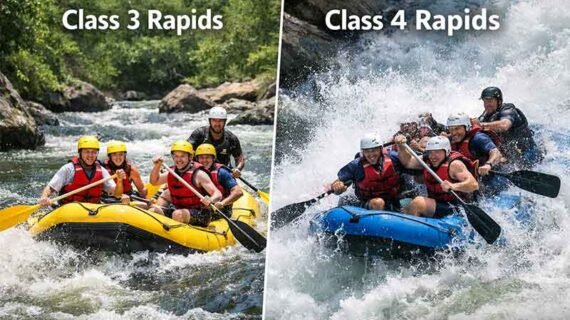
They feature moderate, irregular waves. You’ll encounter narrow passages and some obstacles that require active maneuvering. The current is strong but manageable with a trained guide and proper teamwork.
What Class 3 Feels Like
Expect real excitement.
You’ll hit waves that splash into the raft. You’ll paddle through fast-moving sections. Sometimes you’ll need quick coordination to avoid rocks.
But overall, it feels controlled. Challenging, yet still fun.
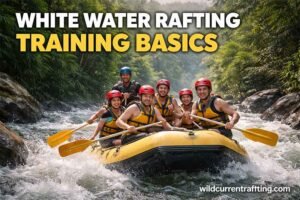
For first-timers, understanding the basics helps a lot. Here’s a helpful read on white water rafting training basics.
Who Should Choose Class 3?
Class 3 is ideal for:
- First-time rafters who want adventure
- Families with older children
- Travelers who want excitement without extreme intensity
- Groups with mixed experience levels
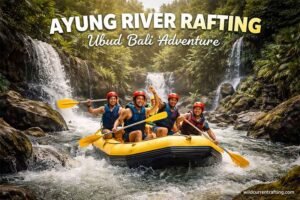
Many popular rafting spots in Bali, especially the Ayung River, are mostly Class 2 to Class 3. You can explore the Ayung River rafting difficulty level to see if it matches your comfort zone.
What Are Class 4 Rapids?
Class 4 rapids are advanced.
The waves are larger and more powerful. The current is faster. The river often contains tight turns and technical sections that demand precise paddling.
This level requires strong coordination and quick response.
What Class 4 Feels Like
It’s intense.
You’ll experience powerful waves that can push the raft sideways. Sudden drops. Strong hydraulics. The raft may tilt sharply.
Unlike Class 3, there’s less room for error. Precision matters.
If you’re wondering about risk levels, this guide on is white water rafting dangerous explains how rapid class affects safety.
Who Should Choose Class 4?
Class 4 is better for:
- Experienced rafters
- Adventure seekers chasing adrenaline
- People confident in fast, aggressive water
- Strong teams with good physical fitness
It’s generally not recommended for complete beginners or young children.
Class 3 vs Class 4 Rapids Explained Clearly
Here’s the simplest way to understand it.
Class 3 rapids are challenging but forgiving. Small mistakes can be corrected quickly by your guide.
Class 4 rapids are powerful and technical. Fast decision-making is critical. Mistakes can escalate quickly.
Think of it like this:
Class 3 feels like a thrilling roller coaster.
Class 4 feels like an extreme ride with sharper turns and bigger drops.
Both are exciting. The difference lies in intensity and technical demand.
Safety Differences Between Class 3 and Class 4
Safety depends on preparation, equipment, and the river’s natural conditions.
In Class 3, rescues are typically easier. If someone falls out, the water is still strong, but more manageable.
In Class 4, water moves faster and more aggressively. Swimmers may travel farther before reaching calm water. That’s why proper safety gear is essential.
A helmet and life jacket are mandatory. If you’re unsure about what’s required, this guide on white water rafting equipment explains everything clearly.
Choosing the Right Rapid Level for You
Ask yourself a few honest questions:
- Have you rafted before?
- Are you comfortable in fast-moving water?
- Do you want fun adventure or maximum adrenaline?
- Are you traveling with kids or beginners?
If it’s your first rafting trip, Class 3 is usually the smarter option. It delivers thrill without overwhelming pressure.
If you already have experience and want something more intense, Class 4 might be your next challenge.
Real Example: Rafting in Bali
Bali is one of Southeast Asia’s top rafting destinations.
The Ayung River in Ubud offers mostly Class 2 and Class 3 rapids. That’s why it’s popular for beginners and families. You still get exciting waves, jungle scenery, waterfalls, and a memorable adventure.
For travelers searching for the best things to do in Ubud Bali, rafting consistently ranks high because it combines adventure and accessibility.
Different rivers around the world vary by water volume and season. Always check the classification and consult experienced operators before booking.
Final Verdict: Class 3 or Class 4?
If you’re new, start with Class 3.
It builds confidence. You learn paddling commands. You understand how the raft reacts to waves.
Later, when you feel ready, you can upgrade to Class 4 for a more technical and intense experience.
Rafting should feel exciting, not overwhelming. The best choice is the one that matches your skill level and comfort.
If you’re planning a rafting adventure in Ubud, Bali, visit Wild Current Rafting. We provide safe, guided tours on the Ayung River with professional instructors and complete safety equipment.
Book your trip today:
Website: https://wildcurrentrafting.com
Phone/SMS/WhatsApp: +6281338284028
Or simply click the chat button on our website to reserve your unforgettable rafting experience.