Do you need to be fit to go rafting? Not necessarily.
You do not need to be an athlete, regular gym-goer, or highly trained swimmer to enjoy a rafting trip. Most recreational white water rafting tours are designed for ordinary people with average fitness levels, including first-time rafters.
However, rafting is still a physical activity. You may need to paddle, maintain your balance, move around the raft, and follow instructions from your guide. Your fitness level can affect how comfortable and enjoyable the experience feels.
The good news is that you usually do not need months of training before your first rafting adventure. With a basic level of fitness, the right preparation, and a suitable rafting route, most beginners can participate safely and confidently.
How Fit Do You Need to Be for Rafting?
For a typical recreational rafting trip, moderate fitness is generally enough.
You should be comfortable walking, climbing stairs, sitting for an extended period, and using your arms for short periods of physical effort. You may also need to walk down to the river and climb back up after the trip.
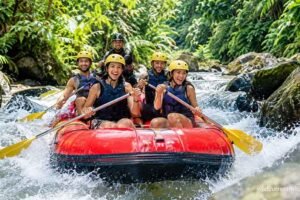
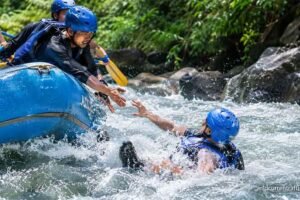
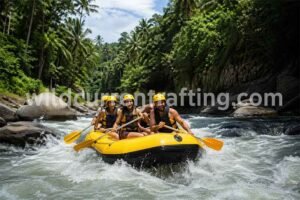
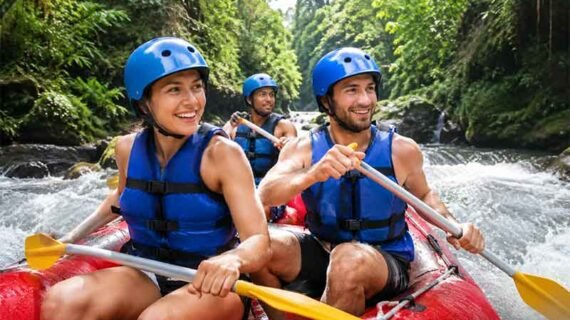
Rafting is not simply sitting in a boat while the river does everything. Depending on the river and tour, you may be asked to paddle together with the rest of your group.
The physical effort usually comes in short bursts rather than continuous intense exercise.
For example, your guide may tell everyone to paddle strongly through a rapid. After the rapid, the pace can become much more relaxed. This combination makes recreational rafting manageable for many people who are not particularly athletic.
If you want to understand the overall experience before booking, this guide explains what to expect on your first rafting adventure in more detail.
Is Rafting Physically Demanding?
Rafting can be physically demanding, but the difficulty depends heavily on the river, rapid classification, trip duration, weather, and your role in the raft.
A beginner-friendly river is very different from an advanced expedition involving powerful Class IV or Class V rapids.
During a recreational rafting trip, you may use several parts of your body.
Your Arms and Shoulders
Paddling is one of the main physical activities during rafting.
You do not have to paddle continuously at maximum strength. Instead, your guide normally coordinates the group and tells you when to paddle harder, slow down, or stop.
Good paddling technique is more important than simply using maximum force.
Your Core
Your abdominal and back muscles help you maintain stability while the raft moves through waves and turns.
You may notice your core working more than expected, especially when the raft hits larger waves.
Your Legs
Your legs help you maintain a stable position inside the raft.
Depending on the raft design and instructions from the guide, you may brace your feet against specific areas of the boat. This helps prevent you from losing your position when the raft moves suddenly.
Your Cardiovascular System
Rafting can temporarily increase your heart rate.
Paddling, walking along the river, climbing stairs, and dealing with excitement can all contribute to physical exertion. However, recreational rafting is usually not comparable to running several kilometers or completing a demanding gym workout.
Can Beginners Go Rafting Without Being Athletic?
Yes.
This is one of the most common misconceptions about white water rafting.
You do not have to be strong or athletic to participate in a beginner-friendly rafting trip. Guides are there to explain the paddling technique, safety procedures, and commands before you enter the river.
The raft also works as a team environment. You are not expected to control the boat by yourself.
The guide normally sits in the raft and manages the route while communicating with the group. Your job is to listen carefully and respond to instructions.
This makes rafting accessible to many first-time participants.
Do You Need to Be Strong to Go Rafting?
You need some functional strength, but exceptional strength is not required.
A person who can comfortably perform everyday activities such as walking, carrying a light bag, climbing stairs, and using their arms should generally find a beginner rafting trip manageable.
Technique also matters.
Someone with average strength but good paddling technique can often perform better than someone who is stronger but ignores the guide’s instructions.
You should not try to prove your strength during a rafting trip. Follow the guide’s commands and paddle when instructed.
Do You Need to Be Fit to Go Rafting in Bali?
If you are planning to go rafting in Bali, the answer depends on the river and the specific tour.
Bali offers rafting experiences suitable for different levels of experience. The Ayung River in Ubud, for example, is a popular option for recreational rafting and beginners.
The physical demands can include paddling, walking, entering and exiting the river, and navigating stairs or paths around the rafting area.
Your fitness level should therefore be considered alongside the difficulty of the rafting route.
For first-time visitors, it is also useful to understand how difficult white water rafting really is before choosing a trip.
Can You Go Rafting If You Are Not a Strong Swimmer?
Swimming ability and physical fitness are two different things.
Many rafting operators allow non-swimmers to participate, particularly on suitable beginner routes, as long as they meet the operator’s safety requirements.
Participants normally wear a properly fitted life jacket throughout the rafting activity.
Still, you should always tell the rafting operator if you cannot swim or are uncomfortable in deep water. This allows the operator and guide to determine whether the selected trip is appropriate for you.
You can also read this guide about whether non-swimmers can go white water rafting before making your decision.
What Fitness Level Is Good for a Beginner Rafting Trip?
You do not need a specific fitness score or athletic qualification.
A practical way to think about it is whether you can comfortably handle the following:
- Walk for 20–30 minutes
- Climb several flights of stairs
- Sit and move around comfortably
- Use your arms repeatedly for short periods
- Maintain your balance while moving
- Follow instructions quickly
- Handle moderate physical activity without becoming unusually exhausted
If these activities are normal for you, you may already have enough basic fitness for many recreational rafting trips.
However, every person’s situation is different. If you have a medical condition, significant mobility limitations, or concerns about strenuous activity, speak with a qualified medical professional before participating.
How to Prepare Physically for Rafting
You do not need an intensive workout program for a normal beginner rafting trip.
A little preparation can make the experience much more comfortable.
Practice Walking
Walking regularly is a simple way to build basic endurance.
This can be particularly useful because a rafting experience may involve walking before or after you reach the river.
Train Your Upper Body
Simple exercises such as light rows, shoulder exercises, and controlled arm movements can help you become more comfortable with paddling.
You do not need to lift heavy weights.
Strengthen Your Core
Planks, bodyweight exercises, and other basic core movements can help with balance and stability.
Even a few short sessions per week can be useful if you are currently inactive.
Stretch and Stay Hydrated
Gentle stretching can help you feel more comfortable before physical activity.
Drink enough water before the trip, especially when rafting in a warm destination such as Bali. Avoid arriving dehydrated after spending several hours in the sun.
For a more complete preparation checklist, see this guide on how to prepare for rafting in Ubud.
What Matters More Than Fitness During Rafting?
Fitness helps, but it is not the only factor that determines whether you have a good rafting experience.
Listening is extremely important.
Your guide may give short commands such as paddle forward, paddle backward, stop, or move. Responding quickly can help the group keep the raft under control.
Attitude matters too.
Some beginners become nervous when the raft approaches a rapid. Staying calm and following instructions is often more useful than trying to be physically strong.
Proper safety equipment is another important factor. A life jacket and helmet should fit correctly, and you should use the equipment according to the operator’s instructions.
Does Body Weight Affect Rafting Ability?
Body weight alone does not determine whether someone can go rafting.
Rafts are designed to carry multiple passengers, and reputable operators consider the number and size of participants when organizing groups.
The important thing is whether the participant meets the operator’s requirements for the particular rafting route and equipment.
If you have concerns about weight limits, mobility, or physical limitations, contact the rafting company before booking.
How Can You Make Rafting Easier?
There are several simple ways to reduce unnecessary physical strain.
First, choose a rafting route that matches your experience level. Beginners should not start with an advanced river simply because they want a bigger adrenaline rush.
Second, listen to your guide. Paddling at the wrong time can waste energy.
Third, use proper technique instead of relying entirely on arm strength. Your entire body can contribute to an efficient paddle stroke.
Finally, get enough rest before the trip. Arriving tired after a late night can make a relatively easy activity feel much harder.
Is Rafting a Good Workout?
Rafting can provide a useful combination of physical activity and outdoor recreation.
Paddling engages the upper body, while maintaining your position in the raft involves your core and legs. Walking around the rafting area can add additional low-intensity activity.
However, you should not think of a recreational rafting trip as a replacement for a structured fitness program.
The main goal is to enjoy the river, work as a team, and experience the outdoors. The physical benefits are a welcome part of the activity.
What If You Are Out of Shape?
Being out of shape does not automatically mean you cannot go rafting.
The key question is whether you can safely handle the physical requirements of the specific trip.
If you rarely exercise, start with a beginner-friendly route and avoid choosing an advanced rafting experience. A little walking and light strength training before the trip can also make a noticeable difference.
You can also tell the operator about your fitness concerns before booking. They may be able to recommend a more suitable option.
Final Answer: Do You Need to Be Fit to Go Rafting?
So, do you need to be fit to go rafting?
No, you do not need to be highly fit or athletic. A basic level of fitness is usually enough for a recreational beginner rafting trip.
You should be capable of moderate physical activity, follow safety instructions, paddle when required, and move around the rafting area without major difficulty.
The most important factors are choosing a suitable river, using proper safety equipment, and listening to your guide.
For travelers visiting Bali, rafting can be a great way to experience the island from a completely different perspective. You get physical activity, river scenery, teamwork, and adventure in one experience.
Experience Rafting in Ubud with Wild Current Rafting
If you are looking for a rafting experience in Ubud, Bali, Wild Current Rafting offers rafting tours for travelers who want to experience the river and surrounding jungle.
Whether you are a first-time rafter or simply wondering whether your fitness level is enough, the team can help you understand the available rafting experience and what to expect.
For information and bookings, contact Wild Current Rafting by phone, SMS, or WhatsApp at +6281338284028, or click the Chat button on the website.