If you have never been white water rafting before, you may wonder, what does a rafting guide do? A rafting guide is much more than someone who sits at the back of the boat and tells everyone when to paddle.
A professional rafting guide is responsible for leading the trip, explaining safety procedures, reading the river, controlling the raft, and helping passengers respond to changing conditions. They also make the experience more enjoyable by sharing local knowledge and keeping the group working together.
Whether you are planning your first rafting trip in Bali or another destination, understanding the guide’s role can make you feel more prepared before getting on the river.
What Does a Rafting Guide Do?
The main job of a rafting guide is to safely lead a group down a river while managing the raft and responding to river conditions.
Before the trip starts, the guide usually gives a safety briefing. This can include how to wear a life jacket and helmet correctly, how to hold a paddle, what commands the guide will use, and what to do if someone falls into the water.
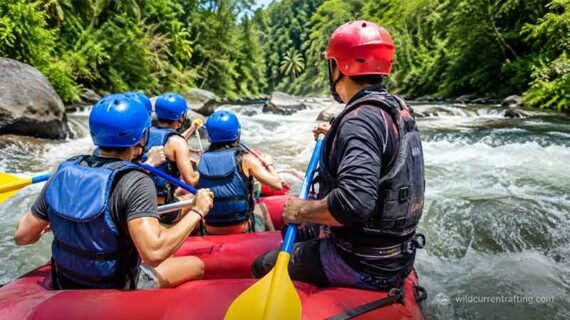
Once the raft enters the river, the guide takes responsibility for navigating the route. They watch the current, identify rapids, avoid hazards, and communicate instructions to the passengers.
A guide also needs to keep an eye on the people in the raft. Good communication is important because several people must work together when paddling through moving water.
How Does a Rafting Guide Control the Raft?
One of the most important parts of a guide’s job is controlling the raft.
A rafting guide uses paddle commands and their knowledge of the river to influence the direction and movement of the boat. Passengers may hear instructions such as “forward paddle,” “back paddle,” “left forward,” or “stop.”
These commands can sound simple, but timing matters. When approaching a rapid, the guide may need everyone to paddle together to maintain speed and keep the raft pointed in the right direction.
The guide can also use the raft’s position, the current, and sometimes a guide paddle to help steer around rocks or other obstacles.
This is why passengers do not need to be experienced paddlers. The guide provides the instructions, while the group helps execute them.
How Does a Rafting Guide Read the River?
Reading the river is a major skill that separates a trained rafting guide from an ordinary passenger.
The river can look different from the shore than it does from inside a moving raft. Guides learn to recognize features such as waves, rocks, drops, eddies, narrow channels, and changes in current.
They also consider water levels and changing conditions. A rapid that looks manageable from a distance can behave differently depending on the river’s flow.
Experienced guides use these visual clues to choose an appropriate line through the rapids.
If you are new to rafting, you can learn more about how white water rafting works before your trip. Understanding the basics can make the experience feel much less intimidating.
What Does a Rafting Guide Do Before the Trip?
A rafting guide’s responsibilities often begin before the raft reaches the water.
The guide may help check equipment, confirm that passengers have properly fitted safety gear, and explain the basic rules of the trip.
A typical safety briefing covers:
- How to wear and adjust a life jacket
- How to use a paddle
- Basic paddling commands
- What to do if you fall into the river
- How to stay inside the raft
- What to do during an emergency
- How to respond when the guide gives an instruction
The guide may also explain what passengers should expect during different parts of the river.
For first-time rafters, this briefing is especially useful because it removes much of the uncertainty before the adventure begins.
Do Rafting Guides Rescue People Who Fall Out?
Yes, dealing with an unexpected fall is part of a rafting guide’s training.
If someone falls from the raft, the guide immediately gives instructions and coordinates the response. Depending on the situation, the person may need to hold onto a safety rope, move into a safer position, or be pulled back toward the raft.
Passengers are normally taught basic procedures before the trip begins. Staying calm and following the guide’s instructions are important.
If you are concerned about falling into the river, read what happens if you fall out of a raft before your trip.
It is also worth remembering that rafting equipment is designed with safety in mind. Helmets and properly fitted personal flotation devices are standard parts of many commercial rafting experiences.
Does a Rafting Guide Do All the Paddling?
Not usually.
One common misunderstanding among beginners is that the guide does everything. In reality, passengers are generally expected to paddle when instructed.
The guide controls the overall strategy, while the group provides much of the paddling power.
This teamwork is one of the most enjoyable parts of rafting. When everyone responds to the same command at the right time, the raft can move efficiently through the river.
You do not need to be extremely athletic to participate in many recreational rafting trips. However, some basic physical effort is involved.
If you are wondering about your fitness level, check this guide on whether you need to be fit to go rafting.
What Skills Does a Professional Rafting Guide Need?
A rafting guide needs a combination of technical skills, communication skills, and practical river knowledge.
Important skills can include:
River Navigation
The guide needs to understand the river and identify the safest practical route through changing conditions.
Raft Handling
The guide must know how to control the raft using paddle commands, positioning, and knowledge of the current.
Safety Awareness
A guide needs to recognize potential hazards and react appropriately if conditions change.
Communication
Instructions need to be clear and easy for passengers to understand, especially when the river is loud.
First Aid and Rescue Skills
Professional rafting operations commonly train guides in emergency procedures and rescue techniques appropriate to their environment and operation.
Local Knowledge
In destinations such as Bali, guides can also add another dimension to the trip by explaining local scenery, jungle landscapes, waterfalls, villages, or other sights along the route.
What Should Passengers Do When the Rafting Guide Gives a Command?
The simplest answer is: listen and respond promptly.
You do not need to memorize dozens of instructions before the trip. Your guide should explain the important commands during the safety briefing.
When the guide says to paddle forward, the group should paddle together. When the guide says to stop, everyone should stop paddling.
Do not suddenly stand up or move around the raft unless the guide tells you to do so.
Following instructions is particularly important near rapids, where the raft may be moving quickly and there is less time to react.
Can Beginners Go Rafting With a Guide?
Yes. Guided rafting is specifically designed to allow people without previous white water experience to participate.
The difficulty depends on the river, water conditions, rapid classification, trip format, and the operator.
For beginners, choosing an appropriate river and trip is more important than trying to find the most extreme experience.
The best rafting trips for beginners generally focus on manageable conditions while still providing the excitement people expect from a river adventure.
What Makes a Good Rafting Guide?
A good rafting guide is not simply someone who can steer a boat.
The best guides combine river knowledge with clear communication and good judgment. They know when to give a strong command, when to explain something, and when to let passengers simply enjoy the scenery.
They also understand that different passengers have different comfort levels.
For someone experiencing rafting for the first time, a calm and approachable guide can make a huge difference. Feeling comfortable asking questions is valuable, especially before entering the rapids.
What Does a Rafting Guide Do in Ubud, Bali?
In Ubud, rafting guides lead trips through the region’s river environment, with the Ayung River being one of the best-known rafting locations in the area.
An Ayung River rafting trip can combine moving water with tropical scenery, jungle surroundings, river valleys, and other natural views.
The guide’s role remains the same: explain the activity, manage the raft, communicate with passengers, and navigate the river.
If you are planning your first Bali rafting experience, it can also help to understand what to expect on your first rafting adventure.
Why Is the Rafting Guide So Important?
A rafting trip is a team activity, but the guide is responsible for leading that team.
Without a guide, beginners would have to understand river navigation, identify hazards, control the raft, and react to changing water conditions on their own.
With a trained guide, passengers can focus on following instructions, paddling together, enjoying the scenery, and experiencing the excitement of the river.
That is the real answer to what does a rafting guide do. They combine navigation, safety, communication, river knowledge, and leadership to help turn a moving river into an organized adventure.
Go Rafting in Ubud With Wild Current Rafting
If you are looking for a rafting experience in Ubud, Bali, Wild Current Rafting offers guided river rafting experiences designed for visitors who want to explore the Ayung River and enjoy an active Bali adventure.
Before booking, consider the river difficulty, trip duration, physical requirements, safety procedures, and what is included in the package.
For information and bookings, contact Rafting Ubud by phone, SMS, or WhatsApp at +6281338284028, or click the chat button on the website.
A good rafting trip is not just about the rapids. It is about having a professional guide who knows the river, communicates clearly, and helps the entire group enjoy the experience safely.