What Happens During a White Water Rafting Tour? If you have never been white water rafting before, you may be wondering what actually happens once you arrive at the river.
Do you simply get into a raft and start paddling? Is there a safety briefing? What happens if you fall into the water? And how difficult is the river?
A typical rafting tour is much more organized than many first-time visitors expect. You will usually go through registration, receive safety equipment, attend a briefing, walk to the river, and then spend several hours navigating rapids with a trained river guide.
For travelers visiting Bali, rafting can also be a great way to experience the island from a completely different perspective. Instead of temples, beaches, and busy streets, you get jungle scenery, waterfalls, rock formations, and the sound of flowing water.
Here is exactly what you can expect during a white water rafting tour, from arrival to the end of the adventure.
What Happens Before a White Water Rafting Tour?
The experience usually starts before you even touch the water.
When you arrive at the rafting base, the staff will normally confirm your booking and collect basic information. Depending on the operator, you may also be asked about your experience level and whether you have any relevant physical limitations.
If this is your first rafting trip, there is no need to feel embarrassed about saying so. Guides work with beginners all the time, and knowing your experience level helps them give you the right instructions.
If you are preparing for your first trip, our guide on how to prepare for rafting in Ubud can help you know what to expect before leaving your hotel.
Getting Your Rafting Safety Equipment
Before entering the river, you will receive essential safety equipment.
A typical rafting setup includes a properly fitted life jacket and helmet. You may also receive a paddle, while some operators provide additional equipment depending on river conditions and the type of trip.
Your guide or staff member should check that the equipment fits correctly. Your life jacket should be snug enough to stay securely in place without making it difficult to breathe or move.
Do not be afraid to ask for an adjustment if something feels loose or uncomfortable. Properly fitted equipment is an important part of a safe rafting experience.
For footwear, choose something that stays securely on your feet and can handle getting completely wet. You can also read our guide on what shoes to wear for white water rafting before your trip.
The White Water Rafting Safety Briefing
One of the most important parts of the tour happens before the raft enters the river.
Your guide will explain basic safety rules and paddle commands. You may hear instructions such as “forward,” “back,” “stop,” or “left” and “right.”
The exact commands can vary between operators, so listen carefully rather than assuming you already know what they mean.
The guide will also explain what to do if someone falls out of the raft. You may be shown how to position yourself in the water and how to hold onto the raft or paddle when appropriate.
This briefing is not designed to scare you. It is there so everyone knows what to do before encountering the rapids.
Getting Into the Raft
After the briefing, the group heads toward the river.
Depending on the location, reaching the water can involve walking down stairs, a trail, or a riverbank. Some rafting locations require a short trek before you reach the starting point.
Once everyone is at the river, the guide will help the group get into the raft safely.
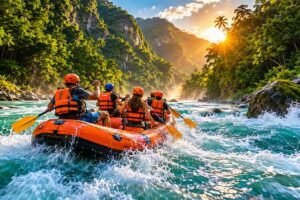
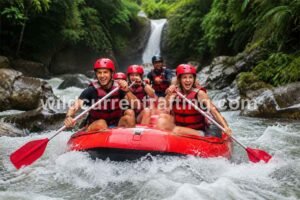
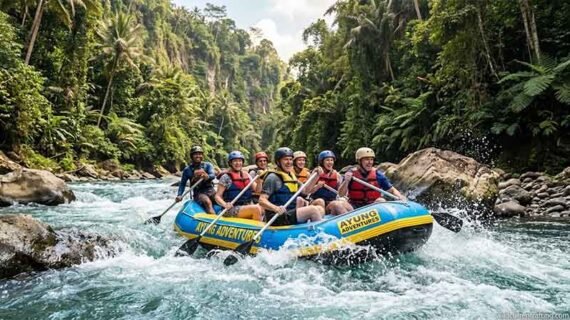
Most commercial rafting tours use inflatable rafts designed to carry several people. You will normally sit along the sides of the raft, with your feet positioned securely inside.
The guide usually sits in a position where they can control the raft and communicate with everyone.
What Happens Once the Raft Starts Moving?
This is when the real adventure begins.
At first, the river may be relatively calm. This gives everyone time to get comfortable with the raft and practice basic paddling commands.
You will quickly discover that rafting is not simply about paddling as hard as possible. Timing and teamwork matter more than raw strength.
When the guide tells everyone to paddle forward, the group needs to work together. If people paddle at completely different times, the raft may not move in the intended direction.
The guide handles the most important navigation decisions. Your job is mainly to listen, paddle when instructed, and enjoy the ride.
Going Through White Water Rapids
Eventually, you will reach sections where the river becomes faster and more turbulent.
This is where the experience becomes exciting.
Rapids can vary significantly in size and difficulty. Some may involve small waves and a gentle splash, while others can create larger waves, sharp turns, drops, or technical sections.
The difficulty of a rafting trip is usually described using the international Class I to Class V rapid classification system.
However, the overall experience depends on more than the rapid classification. Water levels, weather, river conditions, the specific route, and the experience of the guide can all affect the trip.
For a closer look at river difficulty, see our guide to Class 1 to Class 5 rapids.
Do You Have to Paddle the Whole Time?
No.
You will usually paddle during specific sections of the trip when the guide gives instructions. There are also calmer stretches where you can relax, enjoy the scenery, and let the river carry the raft.
This is one reason rafting can be enjoyable even for people who are not particularly athletic.
That said, rafting is still a physical activity. You may paddle repeatedly, brace yourself inside the raft, and use your core and upper body to maintain your position.
If you want to prepare beforehand, learning how to prepare physically for rafting can be useful.
What If You Fall Out of the Raft?
This is one of the most common concerns among beginners.
Falling into the water is possible, especially when going through more active rapids. However, commercial rafting trips are designed around safety procedures, and guides are trained to manage situations where someone leaves the raft.
Your guide will explain the appropriate response during the safety briefing. Follow those instructions carefully rather than trying to improvise.
The most important thing is to stay calm and listen to the guide.
You should also understand that swimming ability and rafting ability are not exactly the same thing. If you are not a confident swimmer, tell the operator before the trip and make sure you understand the safety procedures. Our guide explains whether non-swimmers can go white water rafting in more detail.
Enjoying the River Scenery
Rafting is not just about rapids.
One of the best parts of a river adventure is seeing landscapes that you cannot easily experience from the road.
In Bali, for example, rafting routes can take you through lush tropical vegetation, jungle-covered cliffs, stone carvings, waterfalls, and sections of relatively untouched river scenery.
On calmer parts of the journey, you can simply sit back and enjoy the surroundings.
This combination of adventure and nature is one reason rafting is popular with travelers looking for something beyond the usual sightseeing itinerary.
Is White Water Rafting Exhausting?
It can be tiring, but most recreational rafting tours are manageable for reasonably active adults.
The level of effort depends on the river, trip duration, water conditions, and how much paddling is required.
You do not need to be an elite athlete. However, expect to get wet, move around, paddle, and use your arms and core.
A good night’s sleep and a normal meal before the trip can help. Avoid arriving dehydrated or overly full.
Wearing suitable clothing also makes a noticeable difference. Quick-drying clothes are generally more comfortable than heavy cotton clothing once you are wet.
What Happens After the Rafting Trip?
Eventually, the raft reaches the designated finish point.
Depending on the location, you may need to walk from the river back to the rafting base. Some operators provide transportation between the river and their facilities.
After changing out of your wet clothes, you may have access to showers, changing rooms, food, drinks, or other facilities depending on the tour package.
Some rafting companies also offer photos or videos from the trip. These can be a fun way to remember the experience, particularly if this is your first time rafting.
How Long Does a White Water Rafting Tour Take?
The time on the river varies depending on the destination and operator.
A tour may include transportation, registration, equipment preparation, safety briefing, the river journey, changing time, and meals. Therefore, the total experience can take considerably longer than the actual time spent paddling.
In Bali, it is common for rafting packages to be combined with other activities or sightseeing.
If you are building a full itinerary, consider leaving enough time around your rafting tour instead of scheduling another activity immediately afterward.
What Should You Bring?
You generally do not need to bring a huge amount of equipment.
Useful items include swimwear or quick-drying clothing, a change of clothes, sunscreen, waterproof protection for valuables, and suitable footwear.
Leave expensive jewelry and unnecessary electronics at your accommodation whenever possible.
For a more complete checklist, see our Bali packing list for tourists.
What Makes Rafting in Ubud Special?
Ubud is one of Bali’s most popular bases for adventure activities, and its river environment offers a very different experience from the island’s beaches.
The Ayung River is particularly well known for rafting. The journey combines moving water with tropical scenery, making the activity feel like both an adventure and a nature tour.
For travelers staying in Ubud, this can be a convenient way to spend half a day away from the busy streets while still enjoying a structured activity with a professional guide.
If you are wondering whether the activity is worth adding to your itinerary, our Ayung River rafting review provides more information about the experience.
Final Thoughts: What Should You Expect From a Rafting Tour?
So, what happens during a white water rafting tour?
You arrive at the rafting base, register, receive your safety equipment, listen to a briefing, and head to the river with your guide. After getting into the raft, you learn basic paddle commands and work together with the rest of the group as you navigate calm sections and rapids.
The experience is a mix of teamwork, excitement, scenery, and plenty of water.
For first-time rafters, the biggest surprise is often how accessible the activity can be. You do not need years of experience or exceptional athletic ability. What matters most is listening to your guide, following safety instructions, and being ready to get wet.
If you are planning a rafting adventure in Ubud, Bali, Wild Current Rafting offers river rafting experiences for travelers who want to explore the Ayung River while enjoying a fun and professionally guided adventure.
For bookings or questions, contact Wild Current Rafting by phone, SMS, or WhatsApp at +6281338284028, or click the Chat button to get in touch with the team.