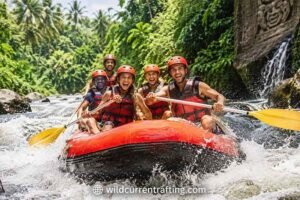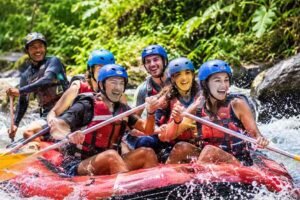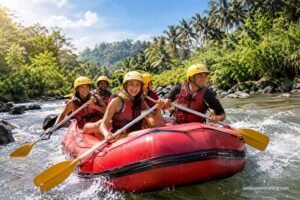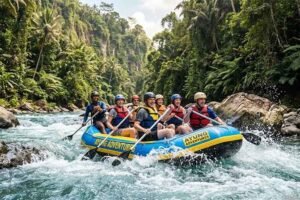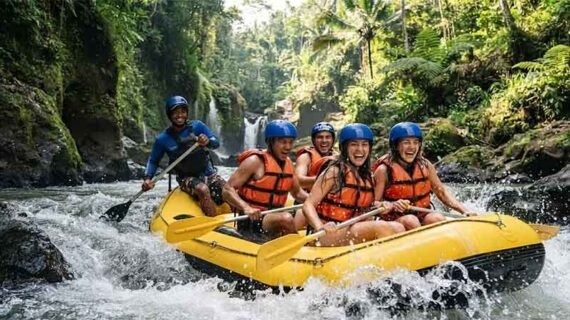
Planning to try white water rafting in Bali but wondering whether it’s actually safe? That’s a fair question, especially if you’ve never been on a rafting boat before. The good news is that Bali rafting can be a safe and enjoyable activity when you choose a reputable operator, follow your guide’s instructions, and use proper safety equipment.
Bali is home to several beautiful rivers, with the Ayung River in Ubud being one of the most popular choices for beginners and casual adventurers. You’ll experience flowing rapids, tropical jungle scenery, and plenty of exciting moments along the way.
Still, rafting is an outdoor adventure, so there are some risks you should understand before jumping into the water. Let’s break down what makes rafting in Bali safe, what could go wrong, and how to prepare for your trip.
Is Bali Rafting Safe for Tourists?
Yes, Bali rafting is generally safe for tourists when the activity is operated by a professional company with trained guides, suitable equipment, and proper safety procedures.
You don’t need previous rafting experience to enjoy most beginner-friendly rafting tours in Bali. Before entering the river, participants normally receive a safety briefing covering basic paddle commands, how to sit properly, and what to do if someone falls out of the boat.
Your guide also stays with your group throughout the journey. They control the raft, communicate with participants, and help everyone navigate the river safely.
However, no outdoor water activity is completely risk-free. River currents, slippery rocks, changing weather, and unexpected situations can create hazards. That’s why following instructions is just as important as wearing your safety gear.
If you want a deeper explanation, check out our guide on whether white water rafting in Ubud is safe.
What Makes White Water Rafting in Bali Safe?
Several safety measures help reduce the risks during a rafting adventure. Understanding them can also help you choose a reliable rafting operator.
1. Professional Rafting Guides
Your rafting guide is one of the most important parts of the experience.
A good guide understands river conditions, knows how to navigate different rapids, and can respond when something unexpected happens. They also explain basic techniques before the trip begins.
For example, you’ll learn when to paddle forward, when to stop, and how to position your body when passing through rough sections.
You can learn more about what a rafting guide does during a trip.
2. Proper Safety Equipment
Every participant should receive essential safety equipment before entering the river.
This normally includes:
- Life jacket: Helps keep your body afloat in the water.
- Safety helmet: Protects your head from accidental impacts.
- Paddle: Used to help control and move the raft.
- Rafting boat: Designed to handle moving water and river obstacles.
Make sure your life jacket fits properly and stays securely fastened. A loose life jacket may not provide the support you need.
Never remove your helmet or life jacket while you’re on the river, even when the water looks calm.
For more details, see our white water rafting equipment guide.
3. Safety Briefings Before the Trip
A proper safety briefing should happen before your rafting adventure starts.
Your guide should explain basic paddle commands, correct seating positions, and emergency procedures. Pay attention, even if you’ve watched rafting videos online.
Some commands you’ll commonly hear include “forward paddle,” “back paddle,” and “stop.” Knowing what they mean helps everyone work together when navigating rapids.
Here’s a useful introduction to common rafting paddle commands.
4. Suitable River Conditions
River conditions play a major role in rafting safety.
Water levels and currents can change depending on rainfall, weather, and seasonal conditions. A river that’s relatively calm in one period may become faster and more challenging after heavy rain.
Responsible operators should assess conditions before allowing trips to proceed. If the river becomes unsuitable, tours should be delayed, adjusted, or cancelled.
Is the Ayung River Safe for Beginner Rafters?
The Ayung River in Ubud is one of Bali’s most popular destinations for white water rafting, particularly among first-time participants.
Its combination of flowing water, manageable rapids on suitable sections, and beautiful tropical surroundings makes it an attractive option for beginners.
You don’t need to be an experienced adventurer to enjoy the journey. Your guide handles navigation while you help paddle and follow instructions.
However, beginner-friendly doesn’t mean completely effortless. You may encounter splashing water, uneven currents, and sections that require everyone to work together.
If you’re curious about the river itself, read our guide on what the Ayung River is like for rafting.
Ayung River vs. Telaga Waja River: Which Is Safer?
Both rivers offer exciting rafting experiences, but they have different characteristics.
The Ayung River is often preferred by beginners and travelers looking for a combination of adventure and scenery. Telaga Waja is generally known for its longer rafting route and more challenging sections.
Neither river should automatically be considered risk-free. Actual difficulty depends on water levels, weather, route conditions, and the operator’s safety assessment.
For a closer comparison, check out Ayung River vs. Telaga Waja rafting in Bali.
Can You Go Rafting in Bali If You Cannot Swim?
Yes, non-swimmers can often participate in beginner-friendly rafting tours, provided the operator accepts them and they meet the activity’s safety requirements.
You don’t need swimming skills to paddle a raft. However, you must understand that falling into the river is possible, and being unable to swim can make that situation more difficult.
A properly fitted life jacket provides flotation support, but it doesn’t eliminate the risk of being in moving water.
Always tell your guide that you cannot swim before the trip begins. Follow their instructions carefully and never remove your life jacket.
Read our detailed explanations about white water rafting for non-swimmers and going rafting in Ubud if you cannot swim.
What Are the Possible Risks of Rafting in Bali?
Rafting is exciting partly because you’re dealing with a natural environment. But that also means certain risks exist.
Here are some situations you should know about.
Falling Out of the Raft
This is one of the situations beginners often worry about.
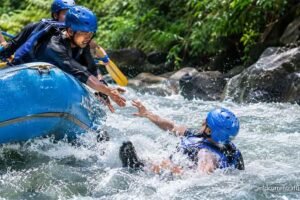
An unexpected wave, sudden movement, or loss of balance can cause someone to fall into the water.
If this happens, stay calm, follow the guide’s instructions, and use the safety techniques explained during the briefing. Don’t attempt to grab rocks or obstacles unless instructed by your guide.
Learn what to expect in our article about what happens if you fall out of a raft.
Slippery Rocks and Riverbanks
Getting into and out of the river can sometimes be more challenging than expected.
Wet steps, rocks, and muddy paths can become slippery. Wear suitable footwear with a secure fit and avoid running around the riverbank.
Changing Weather and Strong Currents
Rain can affect river conditions, especially when it becomes heavy or continues for an extended period.
Light rain doesn’t automatically mean rafting must stop. However, heavy rainfall may increase water levels and create stronger currents.
Operators should monitor conditions and make decisions based on safety rather than simply continuing every scheduled trip.
You can find out more about what happens if it rains during your Ubud rafting tour.
Minor Injuries
Scratches, bruises, and bumps can happen during outdoor activities.
Following your guide’s instructions, wearing the correct equipment, and avoiding unnecessary movements can help reduce these risks.
How to Choose a Safe Rafting Company in Bali
Choosing the right operator can make a huge difference to your experience.
Don’t make your decision based only on the cheapest advertised price. A professional company should prioritize safety, provide clear information, and explain what’s included in the package.
Before booking, consider these points:
- Experienced guides: Check whether guides have appropriate training and river experience.
- Safety equipment: Confirm that helmets and life jackets are provided and properly maintained.
- Clear safety instructions: The company should provide a briefing before departure.
- River condition assessments: Ask how the operator handles unsuitable weather and water conditions.
- Transparent pricing: Understand what’s included and whether there are additional charges.
- Customer reviews: Read recent feedback about the guides, equipment, and overall experience.
You can also explore our list of top-rated rafting companies in Ubud before making your decision.
7 Practical Tips to Stay Safe During Bali Rafting
Want to enjoy the adventure without unnecessary worries? Keep these simple tips in mind.
1. Listen to your guide. Follow every instruction, especially during rapids and unexpected situations.
2. Wear your life jacket correctly. Make sure it’s properly secured before entering the water.
3. Keep your helmet on. River conditions can change quickly, so don’t take it off during the trip.
4. Wear suitable footwear. Choose secure water shoes or sandals designed for outdoor activities.
5. Avoid alcohol before rafting. You need to stay alert and respond quickly to instructions.
6. Be honest about your physical condition. Inform the operator about injuries, medical concerns, or mobility limitations before booking.
7. Don’t force yourself. If you’re uncomfortable with the conditions or feel unwell, tell your guide immediately.
For more preparation advice, check our Bali rafting tips for first-timers.
Who Should Avoid or Postpone Rafting in Bali?
Although rafting is suitable for many travelers, it’s not the right activity for everyone.
People with certain medical conditions, serious mobility limitations, recent injuries, or conditions that could be affected by physical exertion should consult a healthcare professional before participating.
Pregnant travelers should generally avoid white water rafting because sudden movements, impacts, and falling into the water can create unnecessary risks.
Children may participate in some rafting tours, but minimum age requirements vary between operators and river conditions.
If you’re planning a family adventure, read our guide on what to know before rafting in Bali with kids.
Is Bali Rafting Worth It Despite the Risks?
Absolutely, provided you understand what you’re signing up for and choose a responsible operator.
Rafting gives you a completely different perspective of Bali. Instead of spending the entire day visiting temples, beaches, or cafes, you’ll get to explore tropical river scenery from the water.
The Ayung River is especially appealing because the experience combines adventure, jungle views, natural waterfalls, and exciting rapids.
It’s also a fun activity for couples, families with eligible children, and groups of friends.
If you’re still deciding, take a look at our guide on whether rafting in Ubud is worth it.
Experience a Safe and Exciting Rafting Adventure with Wild Current Rafting
Ready to experience white water rafting in Ubud, Bali?
Wild Current Rafting offers Ayung River rafting experiences for travelers who want to explore Bali’s natural beauty while enjoying an exciting outdoor adventure.
Our rafting package is priced at IDR 500,000 per person, with a special group rate of IDR 2,250,000 for five people.
The package includes:
- Professional rafting guide
- Safety briefing and basic rafting instructions
- Rafting equipment, including a helmet and life jacket
- Dry bag for small personal belongings
- Shower facilities and towel
- Drinking water
Hotel pickup is not included, so please arrange your own transportation to the rafting location.
Whether you’re visiting Bali for the first time or looking for something different to do in Ubud, rafting on the Ayung River is an experience worth considering.
Contact Wild Current Rafting:
- Phone/SMS/WhatsApp: +62 813-3828-4028
- Website: https://wildcurrentrafting.com/
- Click the chat button on our website to speak with our team.
Book your rafting adventure, follow your guide’s instructions, and get ready to enjoy the beautiful rivers of Ubud!